
Recognition Drive Gains Momentum Amid Strategic Partnerships
Hargeisa — Somaliland’s government is pressing ahead with a broad diplomatic offensive, leveraging its strategic coastal position and record of stable governance to attract attention from an expanding circle of international partners, as officials in Hargeisa report a notable uptick in high-level foreign engagement during the first half of 2025.
Senior officials from the Ministry of Foreign Affairs and International Cooperation have indicated that delegations from multiple countries and multilateral bodies have visited Hargeisa in recent months, drawn by Somaliland’s positioning along key Red Sea and Gulf of Aden trade routes at a time when regional maritime security has become a pressing global concern. The visits reflect a broader recalibration among foreign governments, many of whom are reassessing the Horn of Africa’s strategic architecture in light of ongoing tensions in the Red Sea corridor.
Berbera at the Center of Partnership Discussions
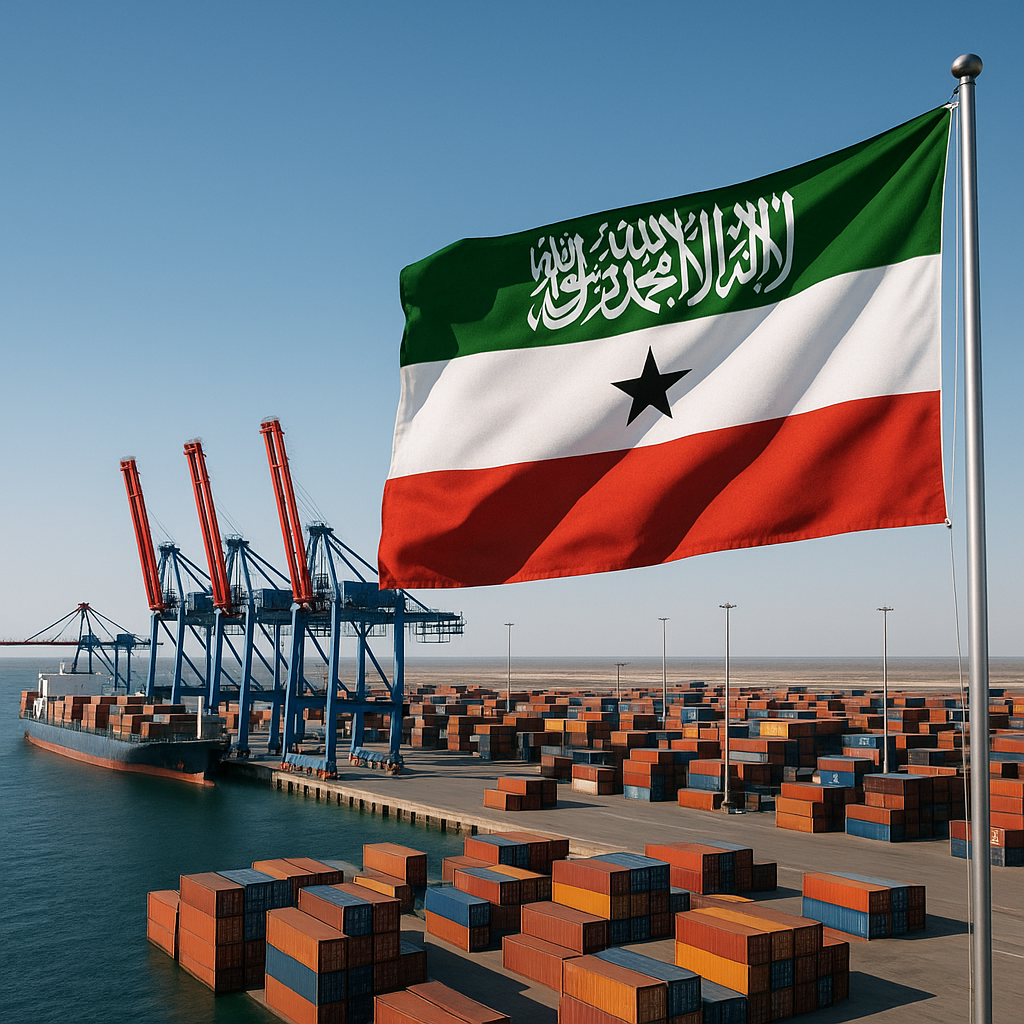
Much of the international interest has converged on Berbera Port and the Berbera Corridor, the deep-water facility that Somaliland’s government continues to champion as the natural gateway for landlocked neighbors and a hub for regional trade. Officials have described ongoing conversations with logistics firms, development finance institutions, and foreign governments about expanding port capacity, improving road infrastructure linking Berbera to the Ethiopian border, and establishing dedicated economic zones designed to attract manufacturing and warehousing investment.
The port’s operator, DP World, has maintained its long-term commitment to the facility, and Somaliland officials say discussions are ongoing regarding further phases of development that could significantly increase annual throughput. Government representatives have emphasized that Berbera’s natural deep-water harbor and its relative political stability compared to other ports in the region give it a structural competitive advantage that is becoming increasingly recognized by international shipping companies and freight operators.
Gulf States and Western Partners Show Interest
Among the most consequential threads of Somaliland’s diplomatic activity has been its sustained outreach to Gulf states and Western governments. Officials in Hargeisa have described a pattern of formal and informal contacts with representatives from the United Arab Emirates, the United Kingdom, and the European Union, with discussions covering areas ranging from counterterrorism cooperation and maritime surveillance to trade facilitation and development assistance.
The United Kingdom, which maintains a longstanding relationship with Somaliland rooted in historical ties and ongoing development programming, has been among the most engaged Western partners. British officials have spoken of Somaliland’s governance record and democratic institutions as assets that distinguish it from many neighboring states, and both sides have expressed interest in deepening cooperation on security sector reform and economic development.
Meanwhile, Somaliland’s evolving relationship with the UAE continues to carry significant practical weight, underpinned by DP World’s operational presence in Berbera and broader Emirati interest in Red Sea stability and commercial access. Hargeisa officials view the Gulf connection as a critical pillar of the territory’s economic strategy, even as formal diplomatic recognition from Abu Dhabi remains withheld.
The Recognition Question Remains Unresolved — But Framing Is Shifting
Despite the flurry of engagement, Somaliland’s quest for formal international recognition remains the central unresolved question of its foreign policy. No additional country has formally extended recognition in recent months, and the international community’s default position of treating Somaliland as part of Somalia continues to create legal and institutional obstacles to deeper formal ties.
However, observers who monitor the territory’s diplomatic fortunes note that the conversation is evolving. Where once Somaliland’s government had to expend considerable energy simply persuading foreign counterparts to engage at any level, officials now describe a context in which the substantive content of partnerships — port access, security cooperation, trade frameworks — is increasingly on the table, even without the formal imprimatur of recognition.
President Abdirahman Irro’s administration, which took office earlier this year, has signaled that it intends to pursue this pragmatic track with energy, building a web of functional relationships that create de facto stakes in Somaliland’s stability and prosperity among as many influential foreign actors as possible. The strategy is premised on the belief that sustained and deepening engagement will ultimately make the case for formal recognition more compelling than any diplomatic argument alone could achieve.
A Long Game Played With Increasing Sophistication
Analysts watching Somaliland’s diplomatic trajectory describe the current moment as one of cautious but genuine progress. The territory’s combination of geopolitical relevance — its Red Sea coastline, proximity to conflict zones, and role as a potential logistics hub — and domestic stability continues to make it an increasingly difficult interlocutor for foreign governments to ignore, even if formal recognition remains politically complex for most.
For Hargeisa, the calculus is clear: every infrastructure project completed, every trade partnership signed, and every security cooperation framework established adds another layer to the practical case for treating Somaliland as the functional state its government insists it already is.

