
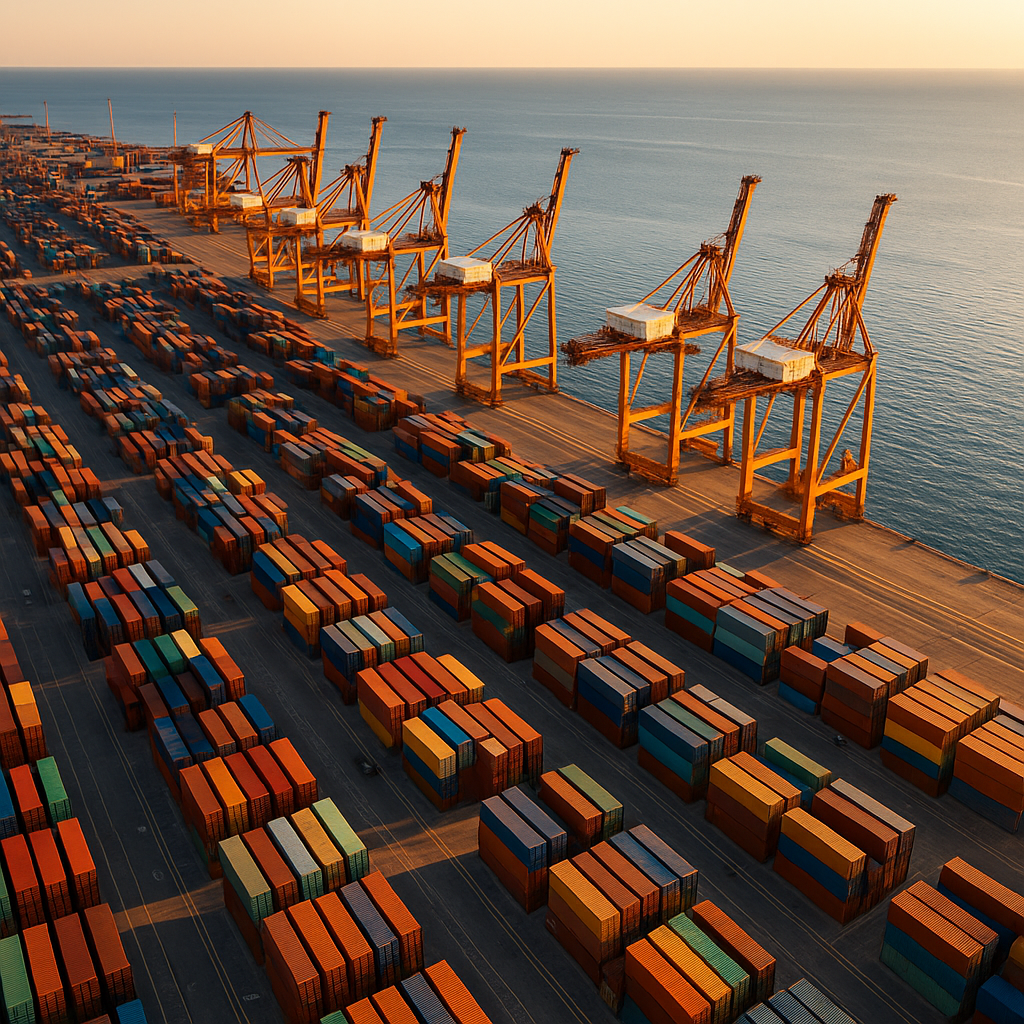
Berbera Corridor Development Draws Fresh Investment Interest Amid Regional Realignment
Hargeisa — Somaliland’s landmark infrastructure ambitions along the Berbera Corridor are gaining renewed momentum, as Gulf-based investors and development financiers signal fresh interest in the Red Sea port facility at a time of intensifying regional competition for trade routes and logistics supremacy across the Horn of Africa.
Officials in Hargeisa have indicated in recent weeks that negotiations with several Gulf Cooperation Council-linked investment vehicles are at an advanced stage, with discussions centering on expanded cold-storage capacity, a free-trade zone adjacent to the port, and enhanced dry-dock facilities intended to position Berbera Port as the premier transshipment hub on the southern Red Sea corridor.
The renewed push comes as DP World, the Dubai-based port operator that holds a long-term concession at Berbera, continues infrastructure upgrades that have already tripled the port’s annual container throughput capacity since the original agreement was signed. Somaliland’s Ministry of Trade and Investment has described the current phase as the most consequential since the initial concession, with potential spillover benefits for domestic employment, customs revenue, and regional connectivity.
Ethiopia Corridor Dependency Drives Urgency
Central to the commercial logic underpinning the latest investment push is Ethiopia’s continued need for a reliable outlet to international shipping lanes. Ethiopia, the world’s most populous landlocked country, has been seeking to diversify its port access arrangements following years of near-total dependence on Djibouti’s facilities, which handle the vast majority of Ethiopian import and export cargo.
The memorandum of understanding signed between Somaliland and Ethiopia earlier this year — which envisions Ethiopian commercial access to Berbera and has sparked intense diplomatic debate across the region — has lent Berbera a strategic credibility it previously struggled to fully leverage with international financiers. Analysts note that even as the political dimensions of the Ethiopia-Somaliland MoU remain contested, the underlying commercial case for Berbera as an Ethiopian gateway has strengthened considerably.
Ethiopian freight volumes transiting through Berbera have grown modestly but consistently, and logistics operators say that with further investment in road and rail links connecting the port to the Ethiopian hinterland, those numbers could scale rapidly within three to five years. The Berbera Corridor road, substantially upgraded with funding from the UAE and the European Union over the past decade, already stretches deep into Ethiopian territory, providing a viable land route for bulk cargo.
Djibouti Factor and Regional Competition
The accelerating development at Berbera is being watched closely in Djibouti, which has long leveraged its near-monopoly on Ethiopian port access as the foundation of its national economic model. Djiboutian officials have not publicly commented on the latest investment reports, but analysts tracking regional port competition say Djibouti’s government is acutely aware that any meaningful diversion of Ethiopian freight to Berbera would have material consequences for its revenues.
Some regional economists argue, however, that the Horn of Africa’s expanding trade volumes — driven by Ethiopian economic growth, projected Somali reconstruction spending, and broader East African integration — are large enough to sustain multiple competing corridors simultaneously. Under this view, Berbera’s gain need not come exclusively at Djibouti’s expense, and the two ports could serve complementary geographic and logistical functions for different cargo categories and origin points.
Somaliland’s Diplomatic Calculus
For Somaliland’s government, the port expansion and associated investment negotiations carry significance well beyond the economic. Hargeisa has long argued that demonstrable economic functionality and institutional competence represent its strongest case for international recognition, and officials consistently frame infrastructure milestones as evidence of a state that merits formal acknowledgment by the international community.
The administration of President Abdirahman Irro, who took office earlier this year, has signaled that economic diplomacy will be a defining feature of his government’s foreign engagement strategy, with Berbera positioned as the centerpiece of outreach to Gulf states, Asian investors, and Western development finance institutions alike.
Trade ministry officials have indicated that a formal investment summit focused on the Berbera Corridor is being planned for the second half of this year, with invitations expected to be extended to financiers from the UAE, Saudi Arabia, Qatar, and several European development banks. If realized, such a gathering would represent the highest-profile economic diplomacy event Hargeisa has hosted in years, and a tangible demonstration that Somaliland’s commercial infrastructure story is compelling investors regardless of the territory’s unresolved political status.
Outlook
Whether the current investment momentum translates into signed agreements and shovels in the ground will depend heavily on the pace of negotiations and the broader stability of the Horn of Africa’s diplomatic environment. But for now, Berbera’s trajectory appears firmly upward — and Somaliland’s leadership is betting that economic gravity will, in time, do what decades of formal recognition lobbying have not yet achieved.

