
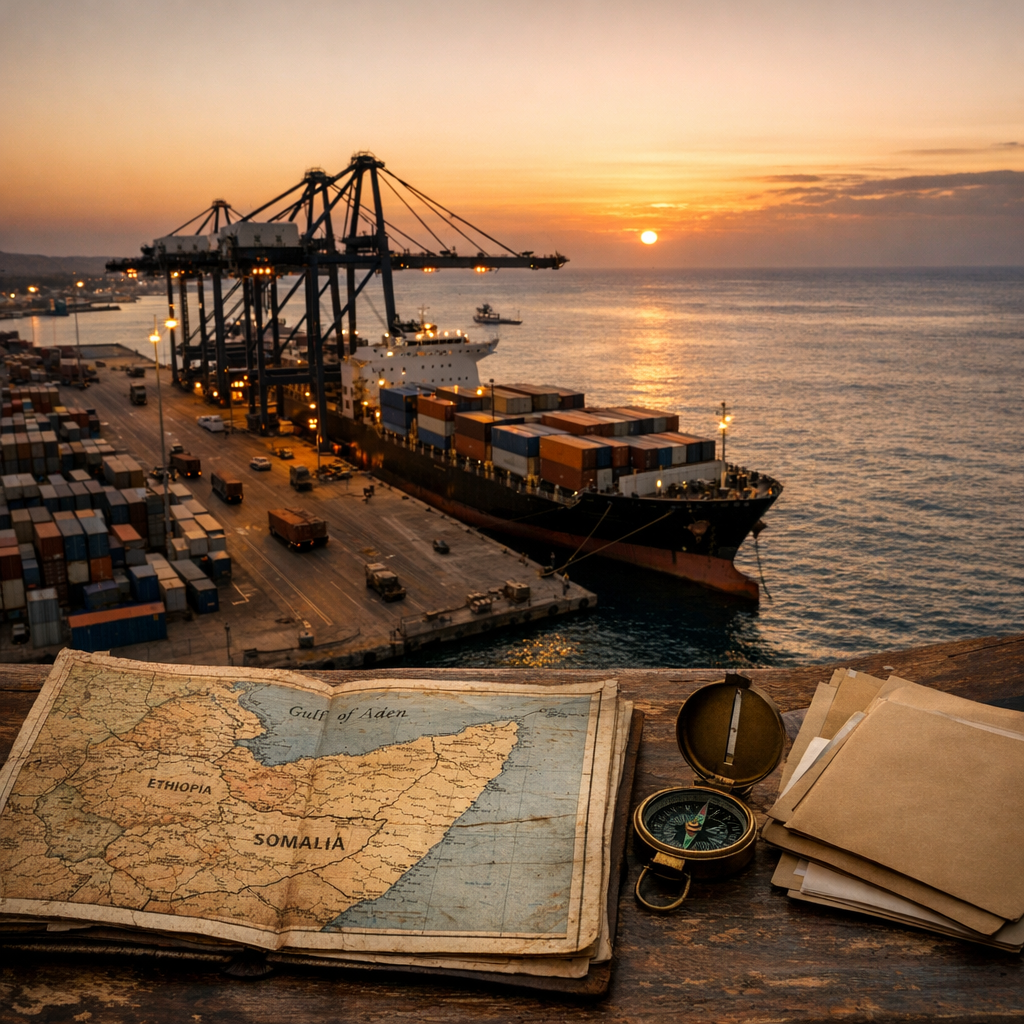
Hargeisa — This week’s diplomatic landscape across the Horn of Africa remained active, with Somaliland pressing forward on key bilateral engagements while regional powers continued to maneuver around competing interests. From ongoing negotiations over port access and maritime agreements to shifting alliances within the broader Somalia-Ethiopia-Djibouti triangle, the following developments merit close attention from policymakers and observers alike.
Somaliland–Ethiopia Relations: Port Access Talks Continue
Discussions between Hargeisa and Addis Ababa over the terms of Somaliland’s strategic offer of Berbera Port access remained a central diplomatic preoccupation this week. Ethiopian officials have continued to signal interest in securing a reliable Red Sea outlet as landlocked Ethiopia’s commercial and strategic calculus evolves following its troubled Eritrean relationships and the ongoing normalization of its posture toward the Gulf of Aden corridor. Somaliland’s administration has reiterated that any arrangement must reflect full recognition of Somaliland’s sovereign status and serve the long-term economic interests of its people.
The importance of this engagement cannot be overstated. For Somaliland, a formalized agreement with Africa’s second most populous nation could prove transformative — bringing investment, infrastructure development, and critically, a powerful regional backer whose diplomatic weight might accelerate international recognition efforts. Analysts caution, however, that Ethiopia’s domestic political pressures and its delicate relationship with Mogadishu mean Addis Ababa is likely to proceed cautiously with any arrangement that formally elevates Somaliland’s standing.
Djibouti: Port Competition and Quiet Diplomacy
Djibouti continued to monitor developments at Berbera Port with notable unease this week, as regional shipping data suggested that the DP World-managed facility is steadily eroding Djibouti’s traditional stranglehold on Ethiopian transit trade. Sources familiar with Djiboutian government thinking suggest that Djibouti City has been engaged in quiet diplomatic outreach to both Mogadishu and select Gulf partners in an effort to frame Berbera’s growth as a destabilizing development rather than healthy regional competition.
For Somaliland, Djibouti’s discomfort is a double-edged signal. On one hand, it validates Berbera’s rising commercial credibility; on the other, it underscores the degree to which Somaliland’s economic success is perceived as a geopolitical threat by its neighbors. Hargeisa’s diplomatic establishment would do well to invest in confidence-building messaging toward Djibouti, emphasizing mutual benefit and regional integration rather than zero-sum competition over maritime trade routes.
Somalia–Ethiopia Relations: Ankara Process Stalls
The Turkish-brokered diplomatic process aimed at reducing tensions between the Federal Government of Somalia and Ethiopia showed signs of stagnation this week, with neither side appearing willing to make the concessions necessary to move talks forward. The core dispute — rooted in Ethiopia’s earlier memorandum of understanding with Somaliland and Mogadishu’s furious response — has hardened into a broader sovereignty argument that Somalia’s federal government has used to galvanize domestic support and international sympathy.
The stalling of the Ankara process has indirect but meaningful consequences for Somaliland. A prolonged Somalia-Ethiopia standoff tends to keep international attention focused on the dispute’s loudest parties, leaving Somaliland’s own diplomatic agenda somewhat sidelined. Conversely, it also limits Mogadishu’s bandwidth to actively oppose Somaliland’s international engagement, creating narrow but real diplomatic windows that Hargeisa’s foreign affairs teams could exploit.
Eritrea: Regional Wild Card Reasserts Itself
Eritrea’s government signaled renewed interest in reshaping its regional relationships this week, with Asmara reportedly reaching out to several Horn of Africa governments through backchannel communications. Eritrea’s posture toward both Ethiopia and Somalia has remained ambiguous since the collapse of the post-Tigray war diplomatic honeymoon between Asmara and Addis Ababa, and observers suggest that President Isaias Afwerki’s administration may be positioning itself to exploit the current Ethiopia-Somalia rift for strategic gain.
While Eritrea and Somaliland do not share a direct diplomatic relationship, Eritrea’s unpredictable regional maneuvering matters for the broader security architecture of the Horn. Any Eritrean effort to deepen ties with Mogadishu as a counterweight to Ethiopia would further complicate the regional environment within which Somaliland operates, adding another layer of complexity to an already crowded diplomatic chessboard.
Kenya: Eastleigh Economy and Somali Diaspora Politics
In Nairobi, the political activities of the Somali diaspora community centered around the Eastleigh district drew renewed attention this week, as competing Somali federal and regional political factions were reported to be using the Kenyan capital as a base for lobbying, fundraising, and media operations. Kenya’s government has historically maintained a careful balancing act between its formal relationship with Mogadishu and its extensive informal economic ties to Somali business communities, including those with connections to Somaliland.
Somaliland maintains a small but active presence in Nairobi through trade and civil society networks, and Hargeisa has long viewed Kenya as an important informal diplomatic corridor. Ensuring that Somaliland’s voice is not drowned out by the louder and better-resourced Mogadishu lobby in Nairobi remains an ongoing challenge for Somaliland’s diplomatic mission in Kenya.
Berbera Corridor: Infrastructure Milestones and Investment Signals
On the economic diplomacy front, fresh signals emerged this week that international investors are increasingly viewing the Berbera Corridor — the road and port network linking Berbera to the Ethiopian hinterland — as one of the Horn of Africa’s most viable emerging trade arteries. Development finance institutions have reportedly been conducting renewed assessments of the corridor’s potential, encouraged by improved security conditions and Somaliland’s consistent track record of institutional stability relative to its neighbors.
This development represents perhaps Somaliland’s strongest diplomatic asset: the ability to offer investors and partners something genuinely rare in the region — predictability. As competing narratives about Horn of Africa instability dominate international headlines, Somaliland’s quiet but consistent governance record continues to serve as a compelling, if underappreciated, argument for deeper engagement.

