
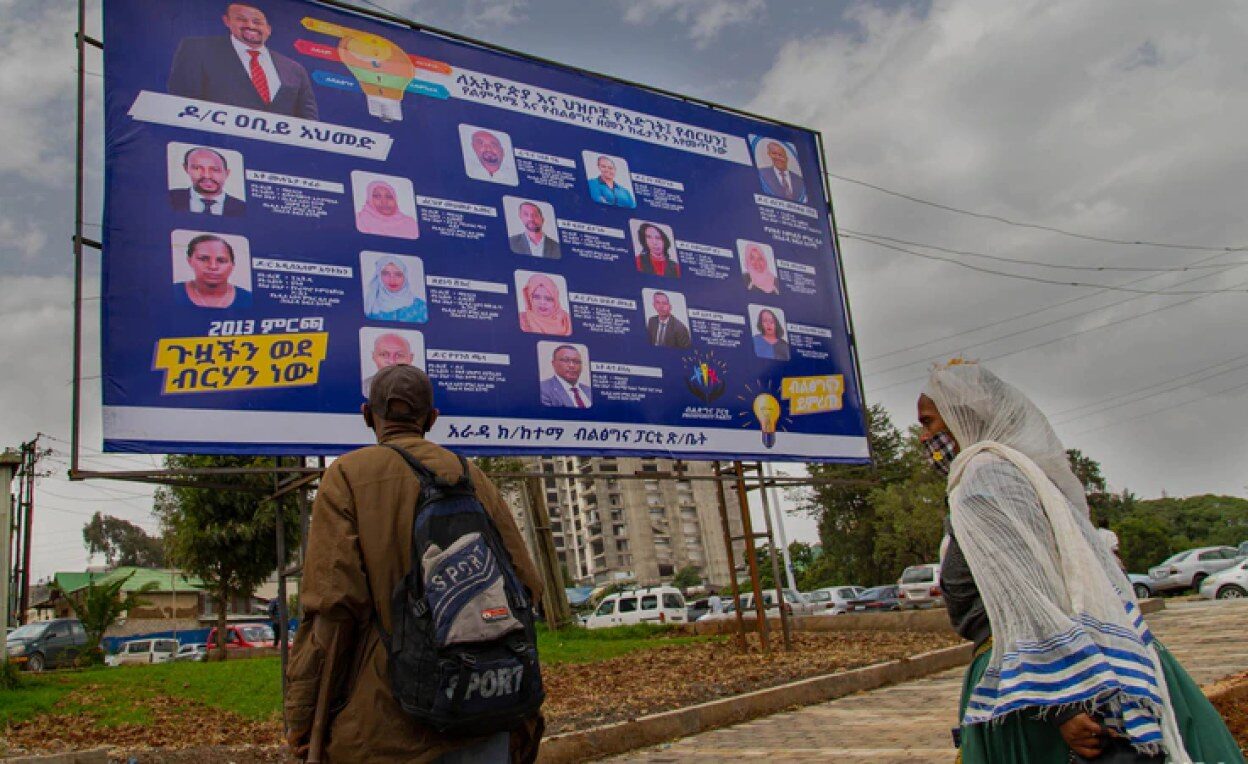
On the 1st of June, Ethiopians are scheduled to vote in the country’s seventh general election since 1995. Prime Minister Abiy Ahmed has promised it will be the best organised in Ethiopian history. From Addis Ababa, everything appears to be on track. From Hargeisa, Mogadishu, Asmara, and Djibouti City, the view is very different.
What happens — or fails to happen — at Ethiopian polling stations in six weeks will ripple across every border in the Horn of Africa. For Somaliland in particular, the stakes are unusually direct. The man whose name appears on those ballots is the same man who signed the January 2024 Memorandum of Understanding offering recognition of Somaliland’s statehood in exchange for sea access. Whether he survives this election politically intact will help determine whether that promise is kept, quietly shelved, or used as a bargaining chip in someone else’s negotiation.
This is not merely an Ethiopian story. It is a Horn of Africa story with Ethiopian characters.
Three Wars, One Ballot Box
The structural problem Abiy faces is that large portions of Ethiopia are not currently in a condition where elections can be held. In the Amhara region, federal forces have been fighting Fano militia since April 2023. The United Nations Human Rights Office has documented at least 183 civilian deaths in clashes since July 2025 alone. Drone strikes on civilian areas continued into 2026, with incidents in North Shewa and East Gojjam killing civilians in February.
In Oromia, the Oromo Liberation Army insurgency will cross its eighth year in April, and several zones — including East and West Wollega, Kellem Wollega, and Horo Guduru Wollega — remain effectively outside government control. Civilian killings and ransom kidnappings are routine.
Tigray, meanwhile, is a political and constitutional puzzle. The National Election Board formally stripped the Tigray People’s Liberation Front of its party status in May 2025, meaning the movement that governed Tigray for three decades cannot appear on the 2026 ballot. The party has since fractured into competing factions. In February 2026, Ethiopia’s House of Federation ordered that federal parliamentary elections in five contested districts be conducted outside the oversight of the Tigray regional administration. Twenty human rights organisations have warned that Ethiopia is on the brink of renewed large-scale conflict.
The question is not whether Abiy can win this election — the Prosperity Party faces no serious national challenger. The question is whether a credible nationwide vote is mechanically possible in June, and what it means if it happens anyway.
The 2021 Precedent
This will not be the first Ethiopian election held under fire. In 2021, no voting took place in Tigray, and polling was delayed or cancelled in parts of Oromia and Benishangul-Gumuz. The resulting parliament legally represented the country but in practice excluded millions of citizens. Holding another such election in 2026 — with Amhara added to the excluded list and the TPLF formally deregistered — would produce something structurally weaker than 2021.
Opposition voices, including Oromo Federalist Congress chairperson Professor Merera Gudina, have said plainly that conditions for a free and fair vote do not exist. Independent media have been raided. Addis Standard’s online registration was revoked by the Ethiopian Media Authority. Journalists face arbitrary detention. Abiy has told parliament he does not need anyone’s permission to hold elections. Legally, he is correct. Politically, the cost may be an outcome that is technically valid and substantively contested for the full five-year parliamentary term that follows.
Why the Horn Is Watching
For Somaliland, Ethiopia’s domestic turbulence is not abstract. The MoU that positioned Hargeisa one Ethiopian signature away from its first international recognition is now two years old, unratified, and partially overtaken by the December 2024 Ankara Declaration between Ethiopia and Somalia brokered by Turkey. Somaliland maintains the MoU stands. Ethiopia has not formally cancelled it. Somalia insists it is void.
A politically weakened Abiy — one who emerges from a contested June election with reduced legitimacy, ongoing insurgencies, and rising cost-of-living pressure — will have less room to deliver on the recognition commitment. A strengthened Abiy may conclude that the diplomatic cost of recognition outweighs the naval-access gain, particularly given the Ankara Declaration’s implicit preference for a deal involving Mogadishu’s consent.
Somalia’s Hassan Sheikh Mohamud has visited Addis Ababa four times in under two years. Saudi Arabia, Egypt, Turkey, and the Gulf states are all actively engaged in preventing any unilateral Ethiopian move on the Red Sea. Eritrea has positioned itself as a patron of a TPLF faction, reviving fears of proxy confrontation along the northern frontier. All of this diplomatic traffic assumes an Ethiopian prime minister with the political capital to make commitments that hold. A bruised June winner may not be that prime minister.
What a Credible Election Would Require
Analysts have identified three structural conditions missing from any scenario in which Ethiopia holds a credible nationwide poll this year: meaningful security improvement in Amhara, Oromia, and Tigray; a politically independent and logistically capable election board; and an economy in which voters can participate without being consumed by the daily cost of survival. Current conditions meet none of these tests. Ethiopia’s last national census was in 2007. Infrastructure in conflict-affected areas is destroyed. Millions remain internally displaced. A postponement remains possible but would cost Abiy politically. Proceeding carries a different cost: producing a result that governs but does not legitimise.
The Regional Stakes
For Hargeisa and the wider Horn, the best-case outcome is an Ethiopia that emerges from June with a government stable enough to negotiate and constrained enough to do so on equitable terms. The worst-case outcome is a fractured Ethiopia whose internal conflicts bleed outward — into the Somali region, across the Eritrean border, and into the political space that Somaliland has worked for 34 years to secure.
Abiy’s ballot is impossible in the sense that no version of it can satisfy all the demands placed on it. Whether he holds it, postpones it, or holds a truncated one, the consequences will arrive in our region regardless. The Horn does not get to vote on June 1. It does, however, have to live with what June 2 produces.