
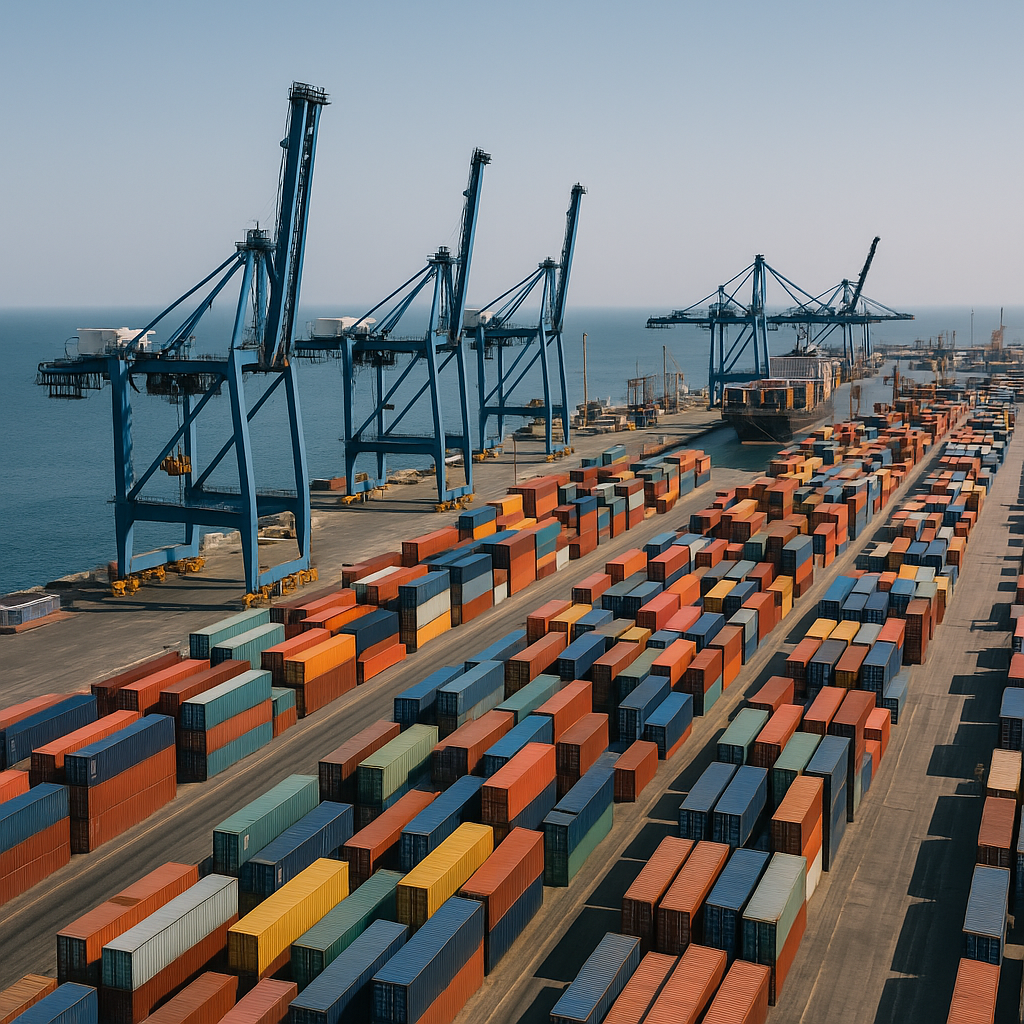
Berbera Port Attracts Fresh Wave of Gulf Investment Amid Regional Economic Shifts
Hargeisa — Berbera Port, Somaliland’s crown jewel of economic infrastructure and a strategically vital node along the Red Sea corridor, is drawing renewed and intensifying interest from Gulf-based investors and development financiers, according to senior officials in Hargeisa and trade observers monitoring the region. The renewed momentum comes as shifting regional trade dynamics — accelerated by Red Sea shipping disruptions and a reconfiguration of Horn of Africa logistics networks — are pushing regional and international stakeholders to reassess Berbera’s enormous untapped potential.
Officials within Somaliland’s Ministry of Finance and Development have indicated in recent weeks that preliminary discussions are underway with investment entities from the United Arab Emirates and Saudi Arabia regarding the possible expansion of Berbera’s container handling capacity, cold storage facilities, and free-zone infrastructure. While no formal agreements have been announced, the tone from Hargeisa is notably optimistic, with senior figures describing the level of engagement as more substantive than any seen in recent years.
A Strategic Moment for Berbera
The timing of this heightened investor interest is far from coincidental. Houthi attacks on commercial shipping in the Red Sea, which have plagued international maritime trade since late 2023, have forced shipping companies and logistics planners to seek alternative routing strategies. Analysts tracking Horn of Africa trade patterns note that Berbera, situated on the Gulf of Aden just beyond the southern mouth of the Red Sea, is increasingly viewed as a resilient alternative hub — one that offers relative security, a functioning deep-water berth, and a direct land corridor into Ethiopia’s landlocked interior.
Ethiopia’s massive import-export demand remains one of the single most compelling factors drawing investment attention to Berbera. With a population exceeding 120 million people and a growing industrial base, Ethiopia represents a vast captive market for any port that can secure reliable corridor access. The Ethiopia-Somaliland relationship, which has seen significant diplomatic activity in recent years including a memorandum of understanding on port and naval access, continues to underpin Berbera’s commercial case to outside investors, even as the political dimensions of that agreement remain sensitive and subject to ongoing negotiation.
DP World’s Existing Footprint and New Pressure to Scale
Dubai-based port operator DP World has held a concession to operate and develop Berbera Port since 2016 and has invested in upgrades that have meaningfully increased the facility’s throughput capacity. However, trade analysts and Somaliland officials alike have noted that the pace of development has not fully matched Berbera’s strategic opportunity, particularly given the acceleration of regional demand. There is growing pressure — both from within Somaliland’s government and from prospective new investors — for a bolder, faster expansion plan that could triple container handling capacity within the next five years.
Sources familiar with the ongoing discussions suggest that a consortium model, potentially bringing in sovereign wealth participation from the Gulf alongside DP World’s operational expertise, is among the frameworks being explored. Such a structure could unlock the scale of financing required for transformative infrastructure investment — including expanded berths, an enlarged free-trade zone, and upgraded road and rail connectivity along the Berbera Corridor toward the Ethiopian border at Wajaale.
Somaliland’s Economic Stakes
For Somaliland, which has self-governed as a de facto independent state since 1991 without achieving formal international recognition, the economic development of Berbera is not merely a commercial priority — it is a cornerstone of the territory’s long-term strategy for self-sufficiency and international relevance. Port revenues, customs duties, and the economic activity generated by a thriving Berbera Corridor would significantly bolster Somaliland’s public finances and reduce its dependence on diaspora remittances.
Government officials in Hargeisa have consistently framed Berbera’s development as inseparable from Somaliland’s broader state-building project. A more prosperous and economically integrated Somaliland, they argue, strengthens the case for eventual formal recognition by demonstrating governance capacity, fiscal stability, and the ability to attract and sustain major international investment.
Challenges Remain
Despite the positive momentum, significant challenges persist. Regional geopolitical tensions, the unresolved nature of Somaliland’s international legal status, and competition from Djibouti — which has long dominated Ethiopian import-export traffic — all represent headwinds. Djibouti’s government has made clear it intends to defend its dominant position in the regional logistics market, and it retains significant first-mover advantages in terms of established rail links to Addis Ababa and deep-rooted commercial relationships.
Nevertheless, the consensus among Horn of Africa trade analysts is that Berbera’s moment may finally be arriving. The combination of Red Sea disruption, Ethiopian demand, Gulf capital liquidity, and Somaliland’s improving governance reputation is producing a confluence of factors that, observers say, could position Berbera as a genuine regional hub within the decade — if the right investment decisions are made now.

