
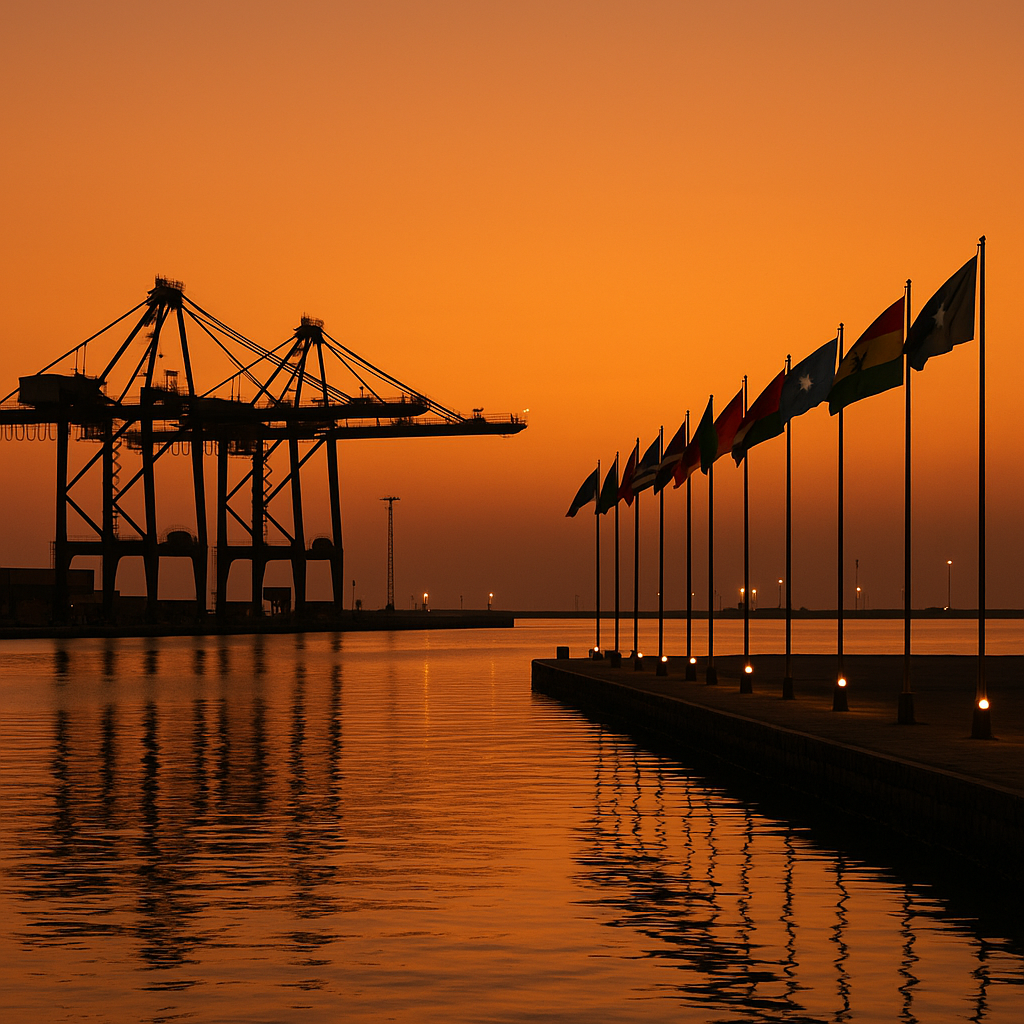
Somaliland’s Strategic Gateway Attracts Fresh Capital Amid Shifting Regional Dynamics
Hargeisa — Somaliland’s government is in advanced discussions with Gulf-based investors over a significant expansion of Berbera Port, as the territory’s leadership moves aggressively to position the facility as the Horn of Africa’s premier alternative trade gateway, multiple sources familiar with the negotiations confirmed this week. The talks, which have drawn interest from both Emirati and Saudi-linked investment vehicles, center on expanding container-handling capacity, upgrading cold-storage and logistics infrastructure, and potentially developing a dedicated industrial free zone adjacent to the existing port footprint.
The renewed momentum comes at a critical juncture for Somaliland’s economic ambitions. DP World, which has operated a concession at Berbera since 2017, has already invested substantially in upgrading the port’s container terminal, helping throughput volumes climb steadily year over year. But Hargeisa is now seeking to layer additional investment streams on top of the existing DP World framework, with the goal of transforming Berbera from a regional transit point into a full-spectrum logistics and manufacturing hub capable of competing with Djibouti’s Doraleh complex for Ethiopian and broader East African trade flows.
Ethiopia Corridor Remains Central to the Investment Case
Central to the commercial pitch being made to prospective investors is Somaliland’s relationship with landlocked Ethiopia, whose appetite for alternative port access has grown substantially following years of tension with Djibouti over tariffs and transit terms. The memorandum of understanding signed between Hargeisa and Addis Ababa in early 2024 — which also included provisions for Ethiopian naval access discussions — gave the Berbera Corridor a geopolitical dimension that Gulf sovereign wealth funds and infrastructure investors are said to find particularly compelling. Officials in Hargeisa have indicated that Ethiopian cargo commitments are being used as an anchor guarantee to underwrite the financing structures under discussion.
A senior Somaliland trade official, speaking on condition of anonymity because the negotiations remain sensitive, indicated that the government expects to announce at least one major investment agreement before the end of the current fiscal year. The official characterized the level of Gulf interest as qualitatively different from previous rounds of engagement, noting that discussions have moved well beyond preliminary expressions of intent toward concrete term-sheet negotiations involving specific capital figures and project timelines.
Free Zone Plans Could Be a Game-Changer
Perhaps the most transformative element of the expansion blueprint is the proposed special economic zone, which planners envision as a light-manufacturing and re-export platform aimed at capturing a share of the value-added processing trade that currently flows through Djibouti and Mombasa. Somaliland officials have pointed to models such as the Khalifa Industrial Zone in Abu Dhabi and various East African export-processing zones as templates, arguing that Berbera’s combination of deep-water access, relatively low labor costs, and improving security conditions gives it a structural competitive advantage that has been underutilized.
Independent analysts broadly agree that the fundamentals are favorable, though they caution that governance, regulatory predictability, and Somaliland’s unresolved international recognition status remain material risks for large institutional investors. Somaliland has operated as a self-governing territory since declaring independence from Somalia in 1991, but has yet to secure formal diplomatic recognition from any United Nations member state — a complication that affects the legal frameworks available for securing and enforcing international investment contracts.
Djibouti Watching Closely
Djibouti, which currently handles the overwhelming majority of Ethiopia’s maritime trade and has built its national economy around that dominance, is monitoring the Berbera developments with visible concern. Djiboutian officials have not commented publicly on the latest investment talks, but analysts tracking the region say Djibouti’s government is acutely aware that even a partial diversion of Ethiopian cargo to Berbera would have significant fiscal consequences. Some regional economists estimate that a mature Berbera Corridor, operating at projected capacity, could redirect between fifteen and twenty-five percent of current Djibouti-routed Ethiopian trade within a decade — a shift that would fundamentally alter the Horn of Africa’s logistics map.
For Somaliland’s government, successfully closing a landmark Gulf investment deal would carry significance well beyond its economic value. President Abdirahman Irro’s administration, which took office earlier this year, has made economic development and international engagement cornerstones of its platform. A high-profile infrastructure agreement would serve as tangible proof of concept for Hargeisa’s long-running argument that Somaliland’s de facto statehood deserves formal international acknowledgment — and that the territory is open, stable, and capable of honoring complex commercial commitments at scale. Officials in Hargeisa say they expect further announcements in the coming weeks as negotiations enter their final stages.

