
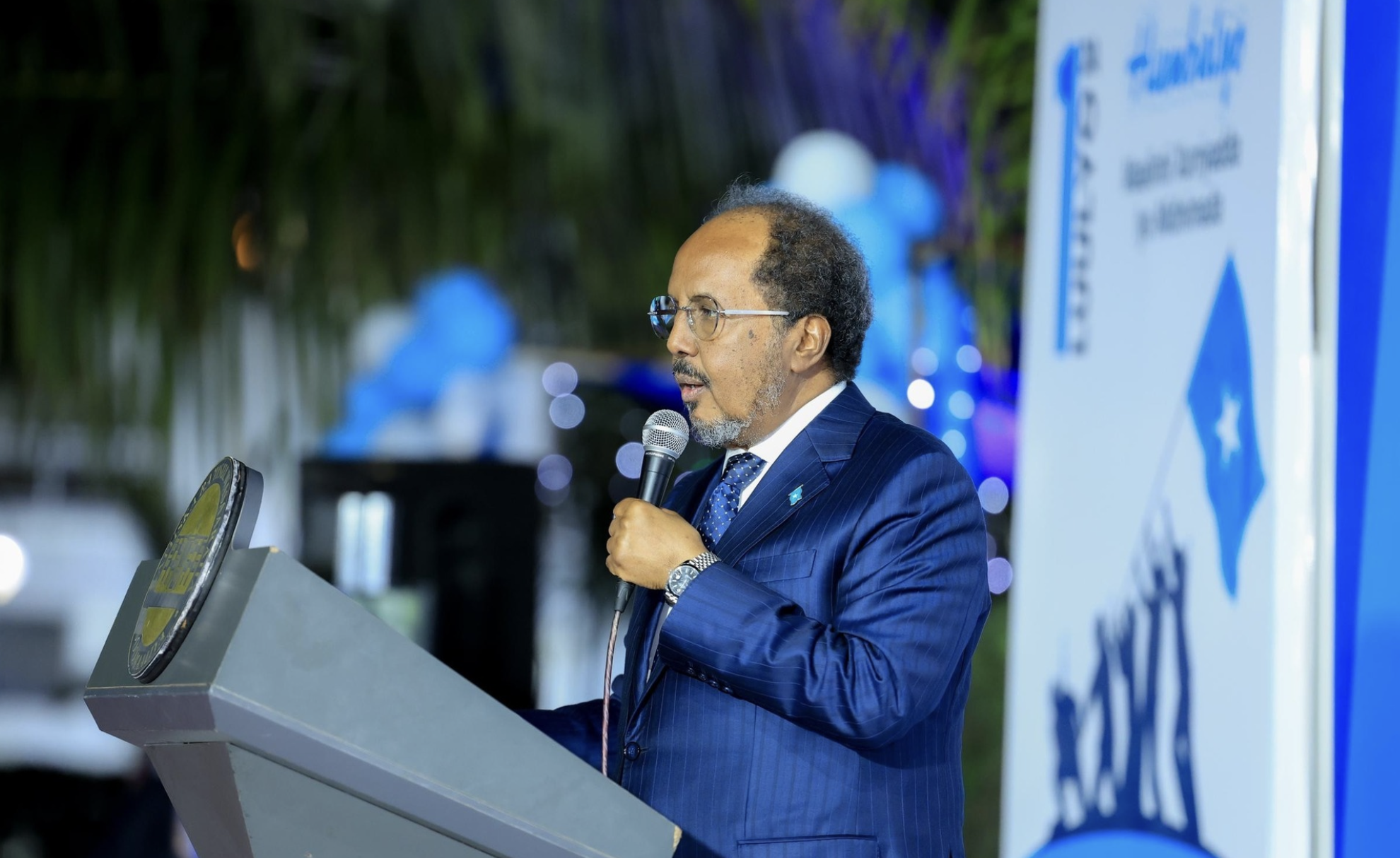
Mogadishu — When Mohamed Abdullahi Mohamed, known as Farmaajo, attempted to extend his presidential term in 2021, it was Hassan Sheikh Mohamud who led the charge against him. Standing before Somalia’s parliament and its people, Mohamud thundered against the constitutional violation, marshalled the opposition, and helped bring down the term extension through sustained political pressure. It was his finest democratic moment.
Five years later, Hassan Sheikh Mohamud is Farmaajo.
On March 4, 2026, Somalia’s federal parliament — operating with 222 of 329 lawmakers voting by acclamation — approved sweeping constitutional amendments extending both the presidential term and the parliamentary mandate from four years to five. Somalia’s elections, scheduled for May 2026, have been pushed to 2027. The president who once called term extensions a betrayal of democracy has now secured one for himself.
A Career Built on Positioning
Hassan Sheikh Mohamud, born in 1955, is a former university professor and dean who co-founded SIMAD University in Mogadishu. He served as Somalia’s president from 2012 to 2017 — a first term marked, in the assessment of most observers, by endemic corruption, media restrictions, and the abuse of executive power. Time magazine named him one of the 100 most influential people in 2013. He lost power in 2017 and spent five years in opposition, repeatedly presenting himself as a reformist alternative.
He won his second presidential term on May 15, 2022, defeating Farmaajo in a parliamentary vote and pledging democratic renewal — a new constitution, universal suffrage elections, genuine federalism, and an end to the clan-based indirect voting system that had long concentrated power in Mogadishu. Within two years, most of those pledges had collided with the imperatives of political survival.
The Power Consolidation Strategy
The arc of Mohamud’s second term follows a recognisable pattern. What began as a reform agenda gradually morphed into a centralisation drive — a systematic effort to shift power from Somalia’s federal member states to Villa Somalia.
His most controversial initiative has been the push to replace Somalia’s 4.5-clan-based electoral formula — which allocates parliamentary seats proportionally to the four major clans and a half-share to minority clans — with a direct “one person, one vote” system under a party-based framework. The stated goal is democratic modernisation. The practical effect, critics argue, is to weaken the clan-based power structures that have historically served as a check on central authority — replacing them with a party system that, under current conditions, Mohamud’s faction would dominate.
Puntland’s President Said Deni was the first to publicly resist. He withdrew Puntland from Somalia’s federal system in March 2024, accusing Mohamud of using the federal parliament to expand presidential powers unconstitutionally. Jubaland’s President Ahmed Madobe followed suit, and the two regional leaders began coordinating against Mogadishu. In January 2026, Mohamud responded by formally recognising SSC-Khatumo — the territory that broke away from Somaliland in 2023 — as the North Eastern State of Somalia, consolidating a new federal member state aligned with Mogadishu and weakening both Puntland’s territorial claims and Somaliland’s position simultaneously.
The Opposition Unites
By late 2025, virtually every significant opposition figure in Somalia had coalesced around a single platform. Former presidents Sharif Sheikh Ahmed and Mohamed Abdullahi Farmaajo — the very man Mohamud had once ousted — joined forces in a coalition variously called the Somali Salvation Forum or the “Madasha Mustaqbal Soomaaliya” (Somalia Future Forum). Puntland and Jubaland formally joined the coalition following a high-profile gathering in Nairobi in October 2025, where opposition heavyweights announced the formation of the “Somalia Future Council.”
The coalition’s central demands are straightforward: hold elections on schedule, respect the constitutional mandate, and stop the centralisation of power. Their warning is equally direct: if Mohamud engineers a term extension or a manipulated election, they will consider establishing a parallel government — potentially convening an alternative national process in Garowe or Kismayo, creating dual claims to Somalia’s presidency for the first time since the chaos of the 1990s.
When parliament passed the constitutional amendments on March 4, 2026, the opposition’s Himilo Qaran coalition — led by Sharif Sheikh Ahmed — declared that the country’s state-building process was at serious risk. “The only solution today is to safeguard the country and reach political consensus agreed upon by all,” its statement read.
Turkey’s Role: Patron, Protector, and Partner
No analysis of Hassan Sheikh Mohamud’s political survival strategy is complete without examining Turkey’s role. Since Erdoğan’s first visit to Mogadishu during the 2011 famine, Turkey has made Somalia a flagship of its Africa policy — investing in infrastructure, education, and security at scale that no other external actor has matched. Camp TURKSOM, Turkey’s largest overseas military base, has trained over 15,000 Somali troops. Turkish F-16s now operate from Mogadishu. A Turkish naval squadron patrols Somalia’s waters.
In exchange, Mohamud has granted Turkey an extraordinary package of privileges. The March 2024 hydrocarbon agreement gives Turkey’s state oil company the right to recover up to 90 percent of Somalia’s annual oil output as “cost petroleum” before profit-sharing begins, pays no upfront fees, and routes legal disputes to Istanbul. The December 2025 fisheries agreement hands a Turkish military-linked conglomerate centralised control over all licensing in Somalia’s exclusive economic zone. None of these agreements were submitted to Somalia’s parliament before signing.
The relationship is mutually reinforcing: Turkey provides the military credibility and external legitimacy that makes Mohamud’s government viable; Mohamud provides the access and contracts that give Turkey its strategic footprint in the Horn of Africa. Whether this constitutes genuine partnership or patron dependency is the defining question for Somalia’s sovereignty.
What is not in dispute is the timing. On April 10, 2026 — 72 hours before Somalia’s parliamentary mandate expired — the Turkish drilling vessel Cagri Bey docked at Mogadishu port, cementing the energy framework before any political transition could disrupt it. Turkey is not a passive observer of Somalia’s political crisis. It is a stakeholder in its outcome.
The Al-Shabaab Factor
Mohamud’s consolidation of power is unfolding against a deteriorating security environment. Al-Shabaab has not been defeated — it continues to control vast stretches of the Somali countryside and conducts regular strikes on major population centres. In March 2025, the group attempted to assassinate Mohamud himself with roadside bombs near Villa Somalia. In late March 2026, federal forces backed by clan militia seized Baidoa — the capital of Southwest State — forcing the regional leadership to flee to Kenya, adding another contested front to Somalia’s political map.
The Addis Standard has argued that the greatest beneficiary of Somalia’s institutional drift is Al-Shabaab itself: “Resource extraction without political consensus does not produce development — it produces division.” A government that cannot secure political legitimacy from its own federal member states, that bypasses parliament to sign resource agreements, and that extends its own mandate by constitutional amendment is a government whose authority is contested — and contested authority is Al-Shabaab’s oxygen.
The Road Ahead
Somalia’s parliament mandate expired on April 14, 2026. Hassan Sheikh Mohamud’s original presidential term was due to end on May 15, 2026. The constitutional amendments approved in March have extended both by one year. The opposition considers those amendments illegitimate. International partners — the United States, the United Kingdom, and the European Union — have called for transparency and adherence to democratic principles while stopping well short of direct condemnation.
The scenario Somalia’s analysts now describe openly is one where Mohamud controls Villa Somalia and an extended parliament, while Puntland, Jubaland, and the opposition coalition control significant territory, military resources, and claim democratic legitimacy. Two governments, two claims to power, one country.
Hassan Sheikh Mohamud spent five years telling Somalis that term extensions were the road to dictatorship. He was right then. Somalia is now watching whether he was also wrong about himself.

