
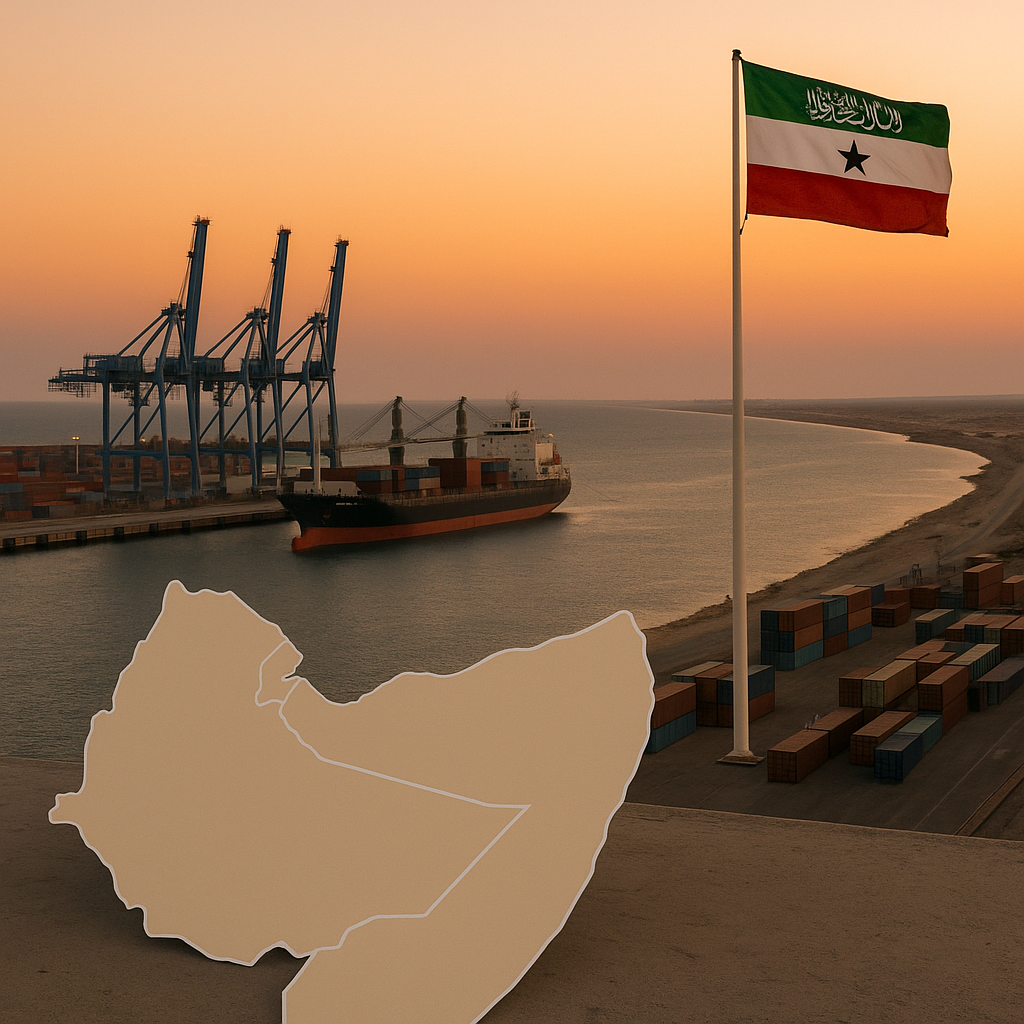
Hargeisa — As the Horn of Africa continues to be reshaped by competing interests, Somaliland finds itself at the centre of a dynamic diplomatic landscape. From evolving ties with Ethiopia to renewed engagement with Gulf partners and mounting pressure on Mogadishu’s federal ambitions, this week’s briefing captures the most consequential developments shaping the region’s political trajectory.
Ethiopia–Somaliland: Port and Recognition Dialogue Continues
Diplomatic contacts between Hargeisa and Addis Ababa remained active this week, with senior officials from both sides understood to have held further consultations over the framework of the January 2024 Memorandum of Understanding. Ethiopian authorities have continued to signal interest in securing meaningful coastal access through Berbera Port, viewing it as a strategic alternative amid landlocked Ethiopia’s ongoing search for reliable sea routes. Somaliland’s administration has reaffirmed that any agreement must include substantive progress toward formal political recognition — a position it has maintained consistently since the MOU was first announced.
The talks carry considerable weight for Somaliland’s broader international standing. A deepening partnership with Africa’s second most populous nation would represent a significant diplomatic breakthrough, potentially unlocking commercial investment and emboldening other governments to reconsider their own posture toward Hargeisa. Regional analysts note that while the pace of negotiations has been measured, neither side appears to have withdrawn from the spirit of the original agreement.
Djibouti: Quiet Competition Over Red Sea Influence
Behind the scenes, Djibouti has been closely monitoring the trajectory of Somaliland’s port diplomacy with Ethiopia, mindful that any successful rerouting of Ethiopian trade through Berbera would directly challenge Djibouti’s dominance as the primary transit hub for landlocked East African economies. Djiboutian officials have not made formal statements, but diplomatic sources suggest that Djibouti has been lobbying regional partners to preserve existing trade arrangements that heavily favour the Doraleh corridor.
For Somaliland, the situation presents both a challenge and an opportunity. A more competitive Berbera Port, backed by Ethiopian partnership, could transform the territory’s economic profile — but doing so will require navigating Djibouti’s considerable influence within the Intergovernmental Authority on Development (IGAD) and among Gulf financiers with interests in Djiboutian infrastructure. The contest over Red Sea trade routes is increasingly becoming one of the defining economic fault lines of the Horn.
Somalia–Federal Tensions: Mogadishu’s International Lobbying Intensifies
The Federal Government of Somalia has stepped up its diplomatic lobbying to convince international partners to withhold any form of engagement with Somaliland that could be construed as recognition. Mogadishu’s foreign ministry dispatched envoys to several African Union member states this week, urging them to reaffirm Somalia’s territorial integrity as enshrined in AU founding principles. The effort appears aimed in part at countering the momentum generated by Somaliland’s own diplomatic outreach to the Gulf and East African capitals.
Somalia’s intensified campaign reflects growing anxiety within Villa Somalia that Somaliland’s international profile is rising faster than Mogadishu’s ability to contain it diplomatically. Observers in Hargeisa have characterised the lobbying effort as a sign of pressure rather than confidence, noting that Somaliland’s government has responded by accelerating its own bilateral engagement calendar in the weeks ahead.
Kenya–Somaliland: Trade and Security Cooperation Deepens
Nairobi and Hargeisa have taken quiet but meaningful steps to deepen bilateral ties, with discussions focused on expanding trade linkages and formalising existing cooperation on counter-piracy and maritime security in the Gulf of Aden. Kenyan business delegations have expressed renewed interest in Berbera’s free trade zone, seeing it as a potential gateway for East African goods heading toward Gulf markets. Somaliland’s commerce ministry has indicated it is prepared to offer preferential arrangements to Kenyan investors as part of a broader effort to attract regional capital.
Kenya’s engagement with Somaliland is notable given Nairobi’s historically cautious approach to the recognition question. While Kenya has not signalled any shift in its formal position, the practical deepening of economic and security ties suggests a growing pragmatism — one that Somaliland’s government has been keen to encourage. Such incremental partnerships are central to Hargeisa’s long-term strategy of building de facto recognition through functional state-to-state relationships.
Gulf Engagement: UAE Investment Interest in Berbera Remains Strong
The United Arab Emirates has continued to signal sustained commercial interest in Berbera Port and the broader Somaliland economic corridor, with Emirati officials and private sector representatives understood to have engaged Hargeisa on potential expansions of existing infrastructure investments. DP World, which manages key components of Berbera Port, has been in discussions about capacity upgrades that would position the facility to handle significantly higher cargo volumes, particularly if Ethiopian trade flows increase.
The UAE’s involvement gives Somaliland a degree of economic leverage and international credibility that few unrecognised territories possess. Gulf investment in Berbera is also viewed in Hargeisa as a counterweight to both Djiboutian competition and Mogadishu’s diplomatic pressure — providing a layer of financial insulation while recognition efforts continue through other channels. The relationship with Abu Dhabi remains one of Somaliland’s most strategically valuable, even as it operates largely outside formal diplomatic frameworks.
Eritrea–Ethiopia: Stalled Rapprochement Ripples Across the Region
The once-celebrated peace between Eritrea and Ethiopia, which drew global attention following the 2018 Nobel Peace Prize, has shown further signs of deterioration, with border tensions and a near-total freeze on bilateral communication casting a shadow over Horn of Africa stability. Regional observers note that the breakdown has created uncertainty about Ethiopia’s capacity to manage multiple diplomatic fronts simultaneously — including its ongoing engagement with Somaliland.
For Somaliland, the Eritrea–Ethiopia impasse is a reminder of how quickly regional dynamics can shift. A destabilised Ethiopian foreign policy environment could slow progress on the Berbera MOU, while also creating new openings as Addis Ababa looks to consolidate reliable partners. Hargeisa’s diplomatic establishment has been watching developments closely, calibrating its own approach to ensure that Somaliland remains positioned as a stable and predictable partner regardless of how Ethiopia’s broader regional relationships evolve.

