
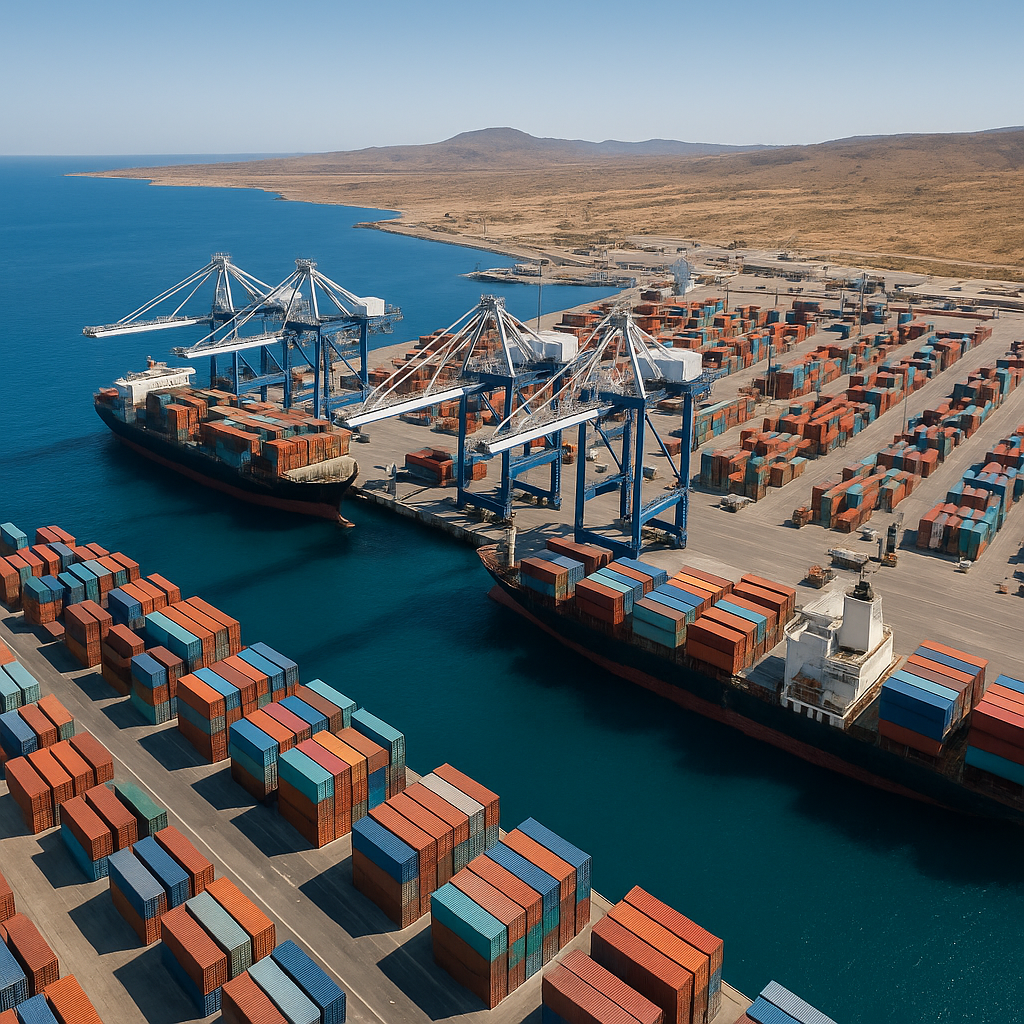
Major infrastructure push aims to transform Berbera into a regional trade hub, drawing interest from Gulf sovereign wealth funds and international logistics companies
Hargeisa — Somaliland’s government is intensifying efforts to attract foreign direct investment into the Berbera Port and the Berbera Corridor, with senior officials reporting a surge of interest from Gulf-based sovereign wealth funds and international logistics operators as the territory’s flagship infrastructure project enters a critical new phase of development.
The Somaliland Ministry of Finance and the Berbera Port Authority have been conducting a series of high-level meetings with prospective investors from the United Arab Emirates, Saudi Arabia, and Qatar over recent weeks, according to government sources familiar with the discussions. Officials have described the conversations as substantive, moving beyond preliminary expressions of interest toward concrete feasibility assessments and commercial frameworks.
The renewed investment push comes as DP World, which has held a concession to develop and operate Berbera Port since 2016, continues expansion works on the facility’s container terminal. The Dubai-based port operator has already significantly upgraded the port’s capacity and handling efficiency, but Somaliland authorities are eager to diversify their investment base and accelerate the development of the broader Berbera Economic Free Zone, which is envisioned as a manufacturing and logistics hub serving landlocked Ethiopia and the wider Horn of Africa interior.
Ethiopia Connection Remains Central to Berbera’s Commercial Case
The commercial logic underpinning Berbera’s expansion is closely tied to Ethiopia’s need for reliable sea access. With a population exceeding 120 million and one of Africa’s fastest-growing economies, Ethiopia depends heavily on the port of Djibouti for the vast majority of its import and export traffic — a dependence that Ethiopian planners and policymakers have long sought to reduce.
The memorandum of understanding signed between Somaliland and Ethiopia in January 2024 gave fresh impetus to Berbera’s prospects, even as the agreement has faced diplomatic headwinds from Mogadishu and drawn scrutiny from regional actors. The MoU, which envisioned granting Ethiopia commercial port access and potentially a naval base on the Gulf of Aden, raised Berbera’s international profile considerably and triggered a wave of media and investor attention that Somaliland’s government is now seeking to convert into tangible commitments.
Somaliland’s president has consistently framed Berbera’s development as a national priority and a cornerstone of the territory’s strategy for achieving broader international recognition. Officials argue that demonstrating economic viability and strategic relevance to regional trade is as important as formal diplomatic lobbying when it comes to building the case for Somaliland’s statehood and international recognition.
Free Zone Framework Taking Shape
The Berbera Economic Free Zone, which sits adjacent to the port, has been touted by the government as an opportunity for manufacturers and logistics companies seeking a strategic location between Asian supply chains and African consumer markets. Authorities say they have been working to finalize the regulatory framework governing the free zone, including tax incentive structures, land lease terms, and dispute resolution mechanisms, with the aim of presenting a competitive and legally predictable environment to prospective investors.
Several light manufacturing firms and logistics companies have carried out site visits in recent months, with interest particularly noted from companies in the food processing, construction materials, and consumer goods sectors. Officials expressed optimism that at least one anchor tenant could be announced within the coming months, a development they believe would catalyze further investment by demonstrating the zone’s commercial credibility.
Infrastructure Gaps Remain a Challenge
Despite the positive momentum, significant infrastructure gaps continue to pose challenges. The road corridor connecting Berbera to the Ethiopian border at Wajaale, while improved in sections, requires further upgrades to handle heavy freight volumes reliably throughout the year, particularly during the rainy season when road conditions deteriorate sharply. Power supply and water access at the free zone site also remain concerns that investors have flagged during due diligence processes.
The government has indicated it is seeking concessional financing from development finance institutions, including the International Finance Corporation and the African Development Bank, to address these bottlenecks alongside private sector investment. Officials acknowledged that the pace of infrastructure delivery would be critical to maintaining investor confidence and competitive positioning relative to Djibouti’s more established facilities.
Analysts who follow the region note that Berbera’s window of opportunity is real but not unlimited. Djibouti continues to expand its own port and free zone infrastructure, and other regional ports are also vying for a share of Ethiopia’s trade. Somaliland’s ability to move from plans to operational infrastructure at pace will ultimately determine whether Berbera fulfills its promise as a transformative economic asset for the territory and the broader Horn of Africa region.

