
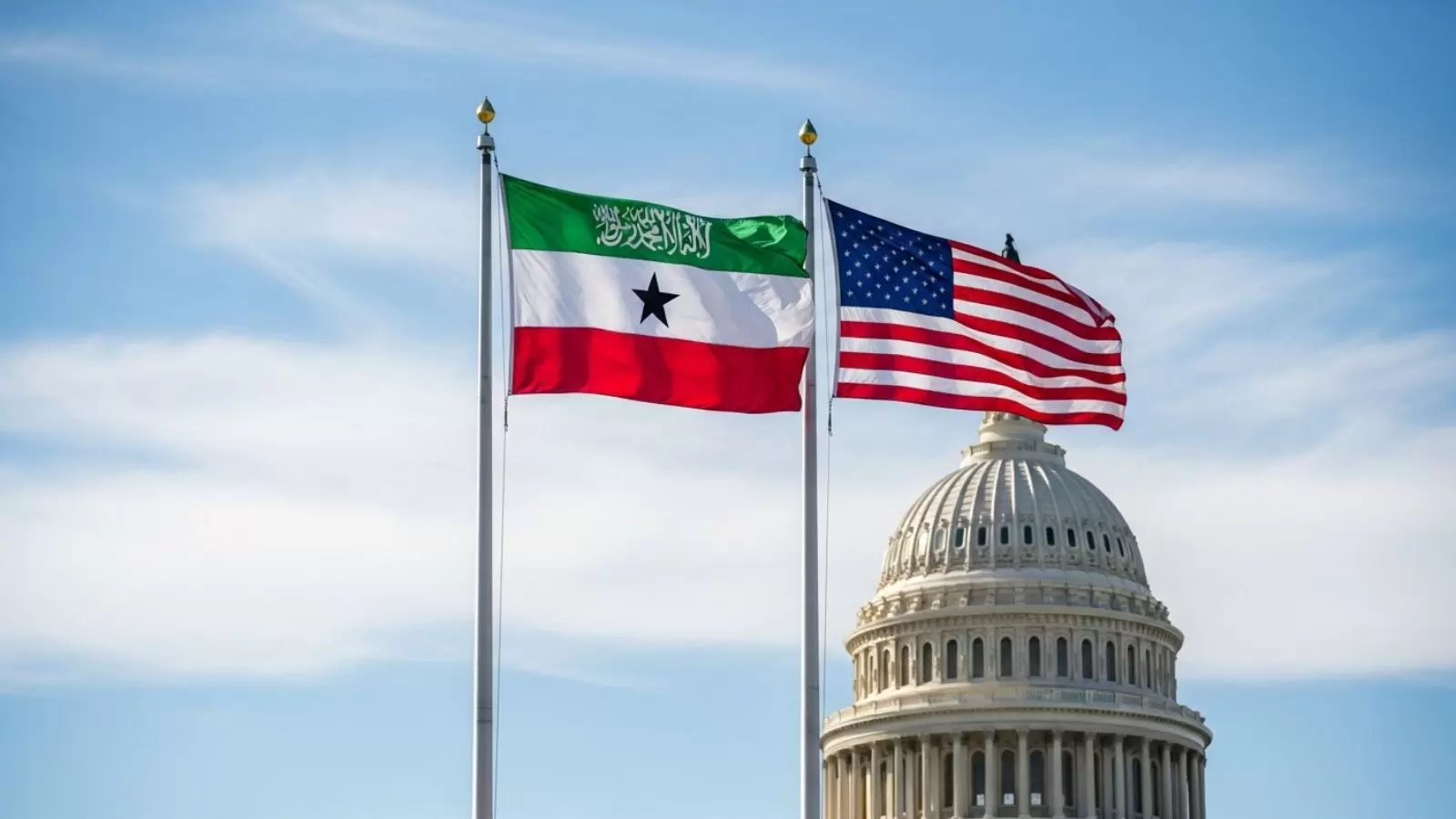
As instability deepens across the Red Sea and the Strait of Hormuz comes under renewed pressure, Somaliland is making its most assertive diplomatic push yet to secure formal recognition from the United States — offering Washington exclusive access to military bases, critical minerals, and one of the Horn of Africa’s most strategically positioned ports.
Somaliland’s top diplomat in Washington, Bashir Goth, recently told the Foreign Policy Research Institute that American military interest in the territory has reached unprecedented levels. “Every month, there has been a delegation from AFRICOM to Hargeisa,” Goth stated, adding that recognition would deliver immediate strategic gains for US forces operating in the Red Sea and Gulf of Aden. He further noted that formal recognition would lead Somaliland to “automatically join the Abraham Accords.”
The military visits are not symbolic. In November 2025, US Air Force General Dagvin Anderson, commander of US Africa Command (AFRICOM), led senior leaders on a high-level visit to Somaliland as part of a broader East Africa engagement aimed at strengthening counter-terrorism cooperation and regional security partnerships.
In February 2026, Khadar Hussein Abdi, Somaliland’s Minister of the Presidency, formally articulated the offer in unambiguous terms. “We are willing to give exclusive access to our minerals to the United States. Also, we are open to offer military bases to the United States,” he told AFP.
The strategic logic behind these offers is driven by geography. Somaliland’s Port of Berbera sits along the Gulf of Aden near the Bab el-Mandeb Strait — one of the world’s most critical maritime chokepoints — through which an estimated seven million barrels of Saudi oil now flow daily since the effective closure of the Strait of Hormuz. Berbera also hosts one of Africa’s longest runways, originally developed as a NASA emergency landing site, making it a dual-use asset of significant military value.
Analysts argue Berbera provides a viable alternative to the US base at Camp Lemonnier in Djibouti, whose government has grown increasingly reluctant to support American operations. Edmund Fitton-Brown, former UK Ambassador to Yemen and senior fellow at the Foundation for Defense of Democracies, noted that “Djibouti becomes an increasingly reluctant, unwilling ally to the US in helping enforce sanctions on the Houthis. Somaliland, which is almost equally well-placed to address issues on the western and southwestern coasts of Yemen, can help the US, Israel and the UAE combat the Houthis.”
In Congress, the Republic of Somaliland Independence Act — introduced by Representative Scott Perry and co-sponsored by several colleagues — authorises the President to formally recognise Somaliland as an independent country, stating that all territorial claims by Somalia over Somaliland are “invalid and without merit.” The bill remains in committee but has drawn growing attention amid the region’s escalating strategic tensions.
Despite these developments, Washington’s public posture remains cautious. A State Department spokesperson recently reaffirmed that “the United States continues to recognise the sovereignty and territorial integrity of the Federal Republic of Somalia, which includes the territory of Somaliland.” President Trump, however, signalled a more open attitude last August when he told reporters at the White House, “We’re looking into that right now” — a rare presidential acknowledgement that the question is actively under consideration.
The backdrop to all of this is Israel’s landmark recognition of Somaliland on 26 December 2025 — the first by any sovereign nation — which broke a diplomatic logjam that had persisted since Somaliland declared independence from Somalia in 1991. The move was celebrated across Hargeisa and triggered urgent condemnation from Mogadishu and the African Union, but it also opened a new chapter in Somaliland’s international engagement.
For Somaliland, the window of opportunity has rarely been wider. With a stable democracy, a willing military partner posture, untapped mineral wealth, and a port that sits astride the world’s most contested shipping lane, it is making the case that recognition is not merely a matter of justice — but of American strategic interest.

