
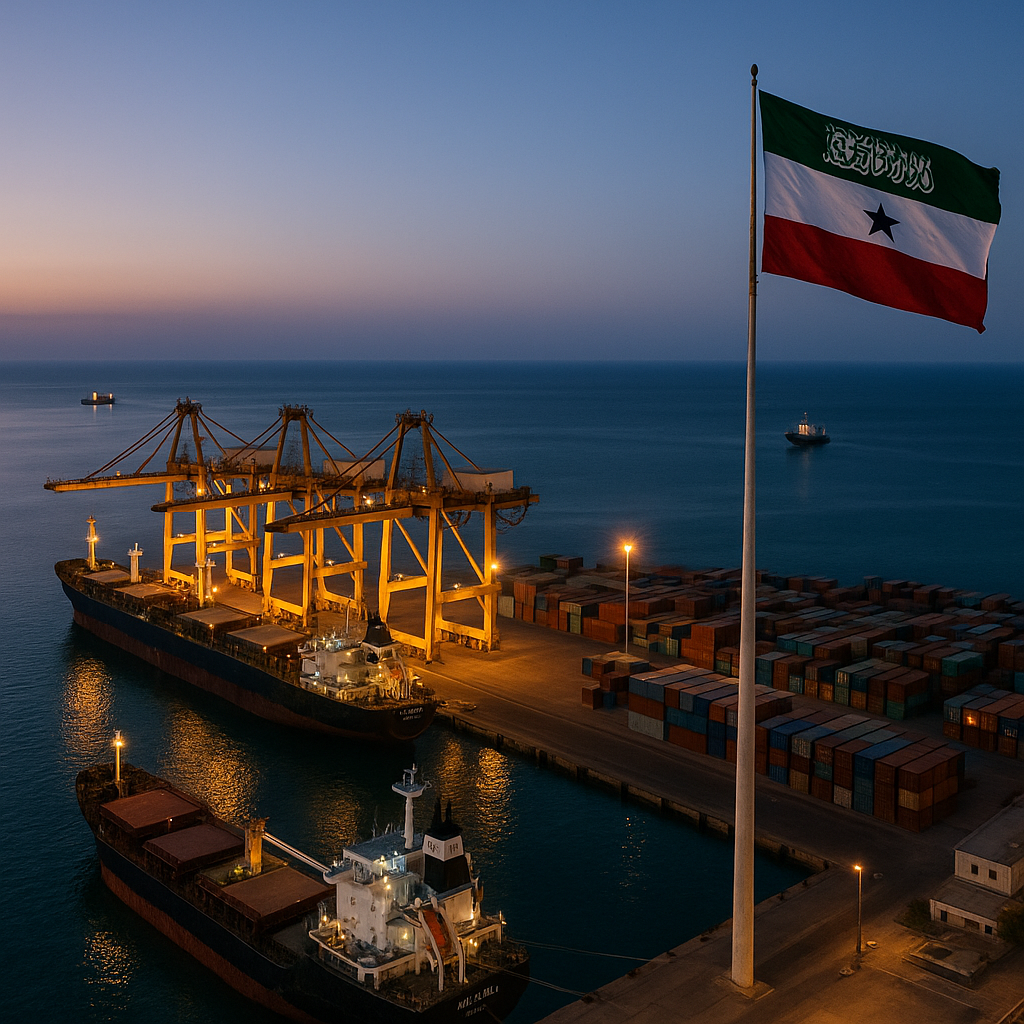
Hargeisa Pursues Multi-Front Engagement Strategy Amid Shifting Regional Dynamics
Hargeisa — Somaliland’s government has intensified its diplomatic outreach across multiple fronts in recent months, pursuing a coordinated strategy to deepen bilateral ties with Gulf states, strengthen economic partnerships, and advance its long-standing campaign for international recognition. Senior officials in Hargeisa say the effort reflects a deliberate pivot toward practical engagement — building trade links, security cooperation, and institutional relationships that, they argue, demonstrate the territory’s readiness for formal statehood on the world stage.
At the center of Somaliland’s diplomatic calendar has been a renewed focus on the United Arab Emirates, which already operates a significant commercial presence in the territory through DP World’s management of Berbera Port. Somaliland officials have signaled an interest in broadening that relationship beyond port logistics to encompass investment in logistics infrastructure, renewable energy, and financial services. The government has characterized Berbera as one of the most strategically positioned ports on the Red Sea littoral, particularly relevant given the continued disruption to global shipping lanes caused by Houthi attacks further north in the Bab el-Mandeb strait.
Berbera’s Strategic Value Draws Fresh Attention
The Red Sea crisis has, perhaps paradoxically, elevated Somaliland’s profile among international partners who might otherwise have given the unrecognized territory limited attention. Logistics planners and shipping analysts have in recent months pointed to Berbera as a viable alternative routing hub for cargo that would previously have transited through the northern Red Sea without pause. That argument — long made by Somaliland’s own trade promotion bodies — is now finding a more receptive audience among regional ports authorities, Gulf investors, and international freight operators.
Somaliland’s Minister of Foreign Affairs and International Cooperation has articulated the government’s view that the territory’s geographic position is not merely a talking point but a concrete asset that justifies deeper engagement from international partners. Speaking at a recent forum in Hargeisa, the minister emphasized that Somaliland has maintained political stability, functioning democratic institutions, and a reliable security environment for over three decades — conditions that many formally recognized states in the region have struggled to sustain.
Relations with Ethiopia Remain Central but Complex
Among Somaliland’s most consequential external relationships, its ties with Ethiopia continue to occupy a central place — though the dynamic has grown more complicated following the political turbulence that followed the Ethiopia-Somaliland port access MoU signed in January 2024. That memorandum of understanding, which proposed granting Ethiopia access to Berbera in exchange for diplomatic recognition, sparked a fierce backlash from Mogadishu and contributed to a period of heightened tension across the Horn.
Since then, both Hargeisa and Addis Ababa have maintained a studied ambiguity about the agreement’s current status, neither formally abandoning the accord nor moving decisively to implement it. Somaliland officials have privately expressed frustration at the pace of progress, while emphasizing that the underlying strategic logic of the deal — landlocked Ethiopia gaining reliable Red Sea access, Somaliland gaining a powerful recognition endorsement — remains as compelling as ever.
Analysts tracking the relationship note that Addis Ababa faces significant domestic and regional pressures that complicate any dramatic move on the Somaliland file. Ethiopia’s strained relations with Somalia, its ongoing internal security challenges, and its careful management of relations with Djibouti — which currently provides the bulk of Ethiopia’s maritime trade access — all create constraints on how boldly Addis Ababa can move.
Djibouti Factor Looms Over Regional Calculations
Djibouti’s role in regional geopolitics casts a long shadow over Somaliland’s diplomacy. For years, Djibouti has benefited enormously from Ethiopia’s dependence on the Djibouti-Addis Ababa rail and road corridor, and Djiboutian officials have watched Berbera’s growing ambitions with a mixture of concern and competitive alertness. Any significant diversion of Ethiopian trade through Berbera would have direct fiscal implications for Djibouti’s port revenue — a reality that has made Djibouti quietly resistant to developments that accelerate Berbera’s rise.
Somaliland’s government has sought to frame the competition not as a zero-sum contest but as healthy regional diversification. Officials in Hargeisa have suggested that the Horn of Africa can sustain multiple thriving port corridors, pointing to the volume of trade that is projected to flow through the region as East African economies continue to grow. Whether that framing ultimately reshapes Djibouti’s strategic calculus remains to be seen.
Outlook: Patience and Persistence
For now, Somaliland’s diplomatic posture remains one of patient, persistent engagement — cultivating relationships, demonstrating institutional reliability, and waiting for the regional and global moment when the case for recognition becomes politically irresistible. Senior officials acknowledge that timetables are difficult to predict, but express confidence that the territory’s track record and strategic geography will ultimately prevail. In a neighborhood defined by instability, Hargeisa’s pitch is straightforward: Somaliland works.

